
Cat® Autonomy Solutions
Helping Our Customers Build Better, Build Safely and Build Efficiently
January 7, 2026
With more than 40 years of development experience under our belts, it’s no surprise that Caterpillar is a leader in providing autonomy solutions to our customers.
Cat solutions make it possible for our customers to automate a single process, remotely control a single machine, automate multiple types of equipment across a mixed fleet, or implement an autonomous fleet of haul trucks that operate around the clock with human oversight.
But when we think about our autonomy solutions, we don’t focus on the “what.” We focus on the “why.”
“We never just talk about technology at Caterpillar,” says Caterpillar Chief Technology Officer Jaime Mineart. “Every advancement we make starts with a clear purpose: helping our customers work smarter, safer, and more efficiently. Our goal isn’t simply to build smarter machines—it’s to deliver solutions that make a real difference in how our customers operate every day”
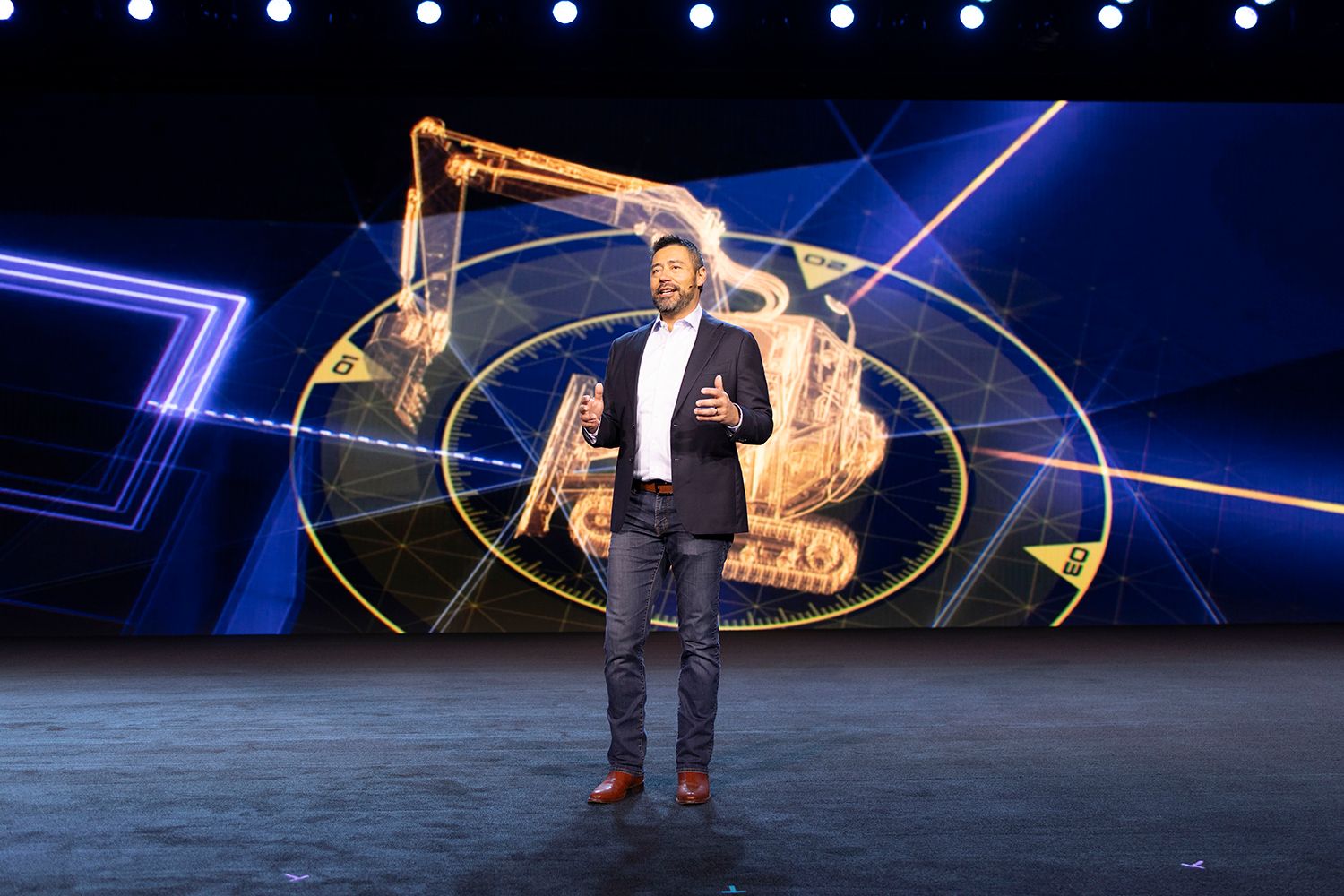
Along with a number of Caterpillar leaders, including CEO Joe Creed, Mineart was a keynote speaker at CES 2026, the industry’s most influential technology event, held Jan. 6-9 in Las Vegas. Her comments focused primarily on Caterpillar autonomy — where it started, where it is today, where it’s going, and why it matters.
Why Autonomy?
Technology is a differentiator for Caterpillar in the industrial sectors we serve: mining, construction and energy. It’s another way we create value for our customers. But that technology must be purpose-driven, says Mineart. And one of its main purposes is keeping people safe.
“Safety is really our litmus test for autonomous technology — taking jobs that are repetitive and hazardous and enabling a remote operation solution. Then, when our customers are ready, we can move to fully autonomous operations. Not only does it make the job site safer, but it creates more efficient workflows, and skilled, desirable jobs for people.”
The expansion to fully autonomous jobsites is not something that can be done overnight. It requires a significant investment in time and resources, as well as a mindset change for our customers.
“We have to deliver proof that autonomous machines are just as precise, safe and durable, while also being substantially more efficient,” Mineart says.
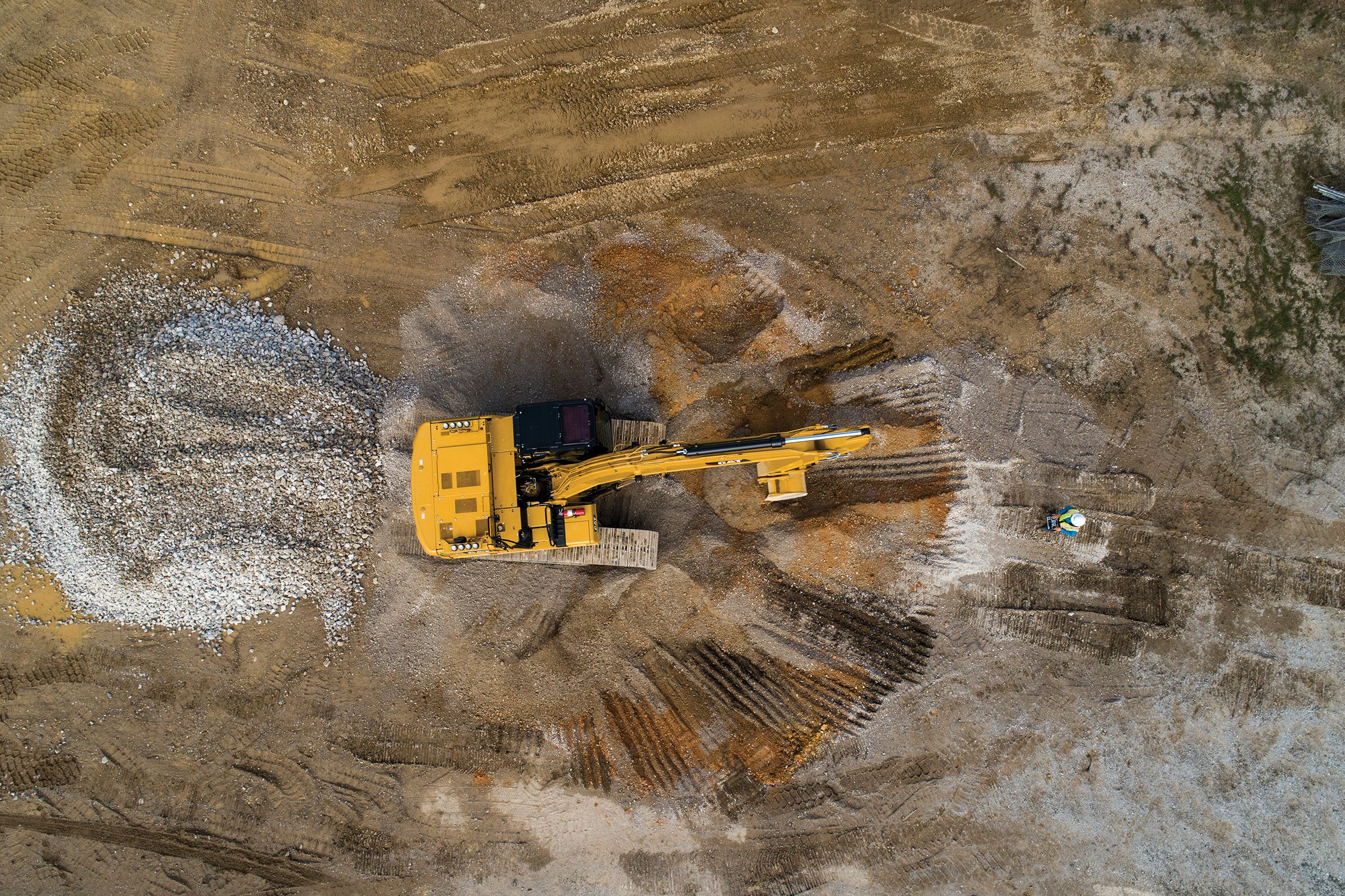
The technology has come a long way since we introduced autonomous haulage in large, open pit mines in 2013, but our early adopter position has given us a tremendous learning advantage. We know that deep domain expertise in our customers’ operations helps us develop and apply purposeful technology that solves problems.
“This is about building trust,” says Mineart. “Our customers are trusting our technology solutions to make their businesses safer and more profitable. They’re also looking for ways to help them fill a talent gap. By reinventing how and where machines are operated, we can help them attract and elevate talent out of less attractive working environments.”
Today, Caterpillar’s autonomous mining fleet is among the largest and most proven in the industry. Nearly 700 Cat autonomous trucks are in operation around the world and together they have safely hauled over 11 billion tonnes of material.
“And these trucks did all that work without a single reported injury,” Mineart points out. “That safety aspect cannot be taken for granted.”
Reducing accidents also increases site productivity. “These are big budget jobs with aggressive timelines and it’s critical to avoid work stoppage,” she says.
These are just a few of the reasons that make our customers’ applications the ideal environments for autonomy. And that’s why we’re expanding into other sectors.
Scaling to New Industries
In 2024, we successfully introduced fully autonomous haulage to our first quarry application, the Luck Stone Bull Run plant in Chantilly, Va., where instead of automating hundreds of large mining trucks working around the clock, we automated four 100-ton Cat® 777 trucks working a single shift.
It was important to recognize the differences between quarry and mining applications to successfully scale the solution to a new application, Mineart points out.
“We embedded our team on the site to focus on people, process and technology prior to deploying the machines,” she says. “This allowed us to tailor our autonomous system to the exact needs of the quarry operations.”
The Luck Stone experience got us that much closer to applying autonomous machines on a construction site, where the level of complexity grows exponentially. We recognize that every jobsite and construction schedule is different, which will put new demands and flexibility requirements on our autonomous technology.
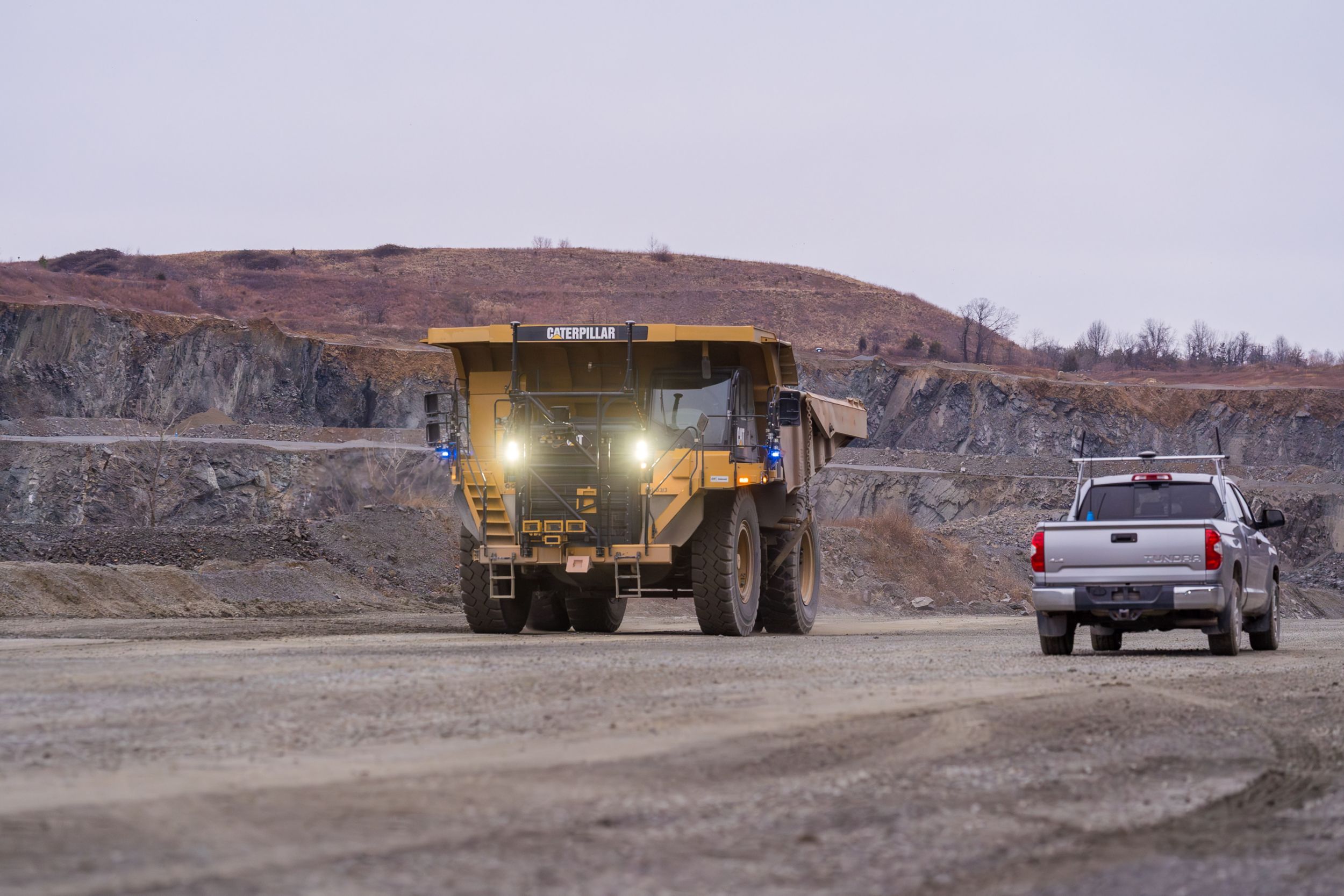
In the construction industry, margins are tight, waste can be high, timelines are short and finding skilled labor can be difficult. Keeping workers safe also can prove challenging on these dynamic jobsites. Autonomous technology can address these challenges.
Caterpillar anticipates adoption of autonomous machines in the short-term expanding across the mining and quarry industries and starting to test on large construction jobsites in the near future.
At CES, Caterpillar introduced a new era of autonomy including five construction machines that will make up an industry-leading fleet.
- Cat loader
- Cat dozer
- Cat haul truck
- Cat excavator
- Cat soil compactor
“The upside to scaling this technology to construction will be tremendous, adding unprecedented levels of safety, efficiency and productivity,” Mineart says. “It will, undoubtably, change the way the world is built.”